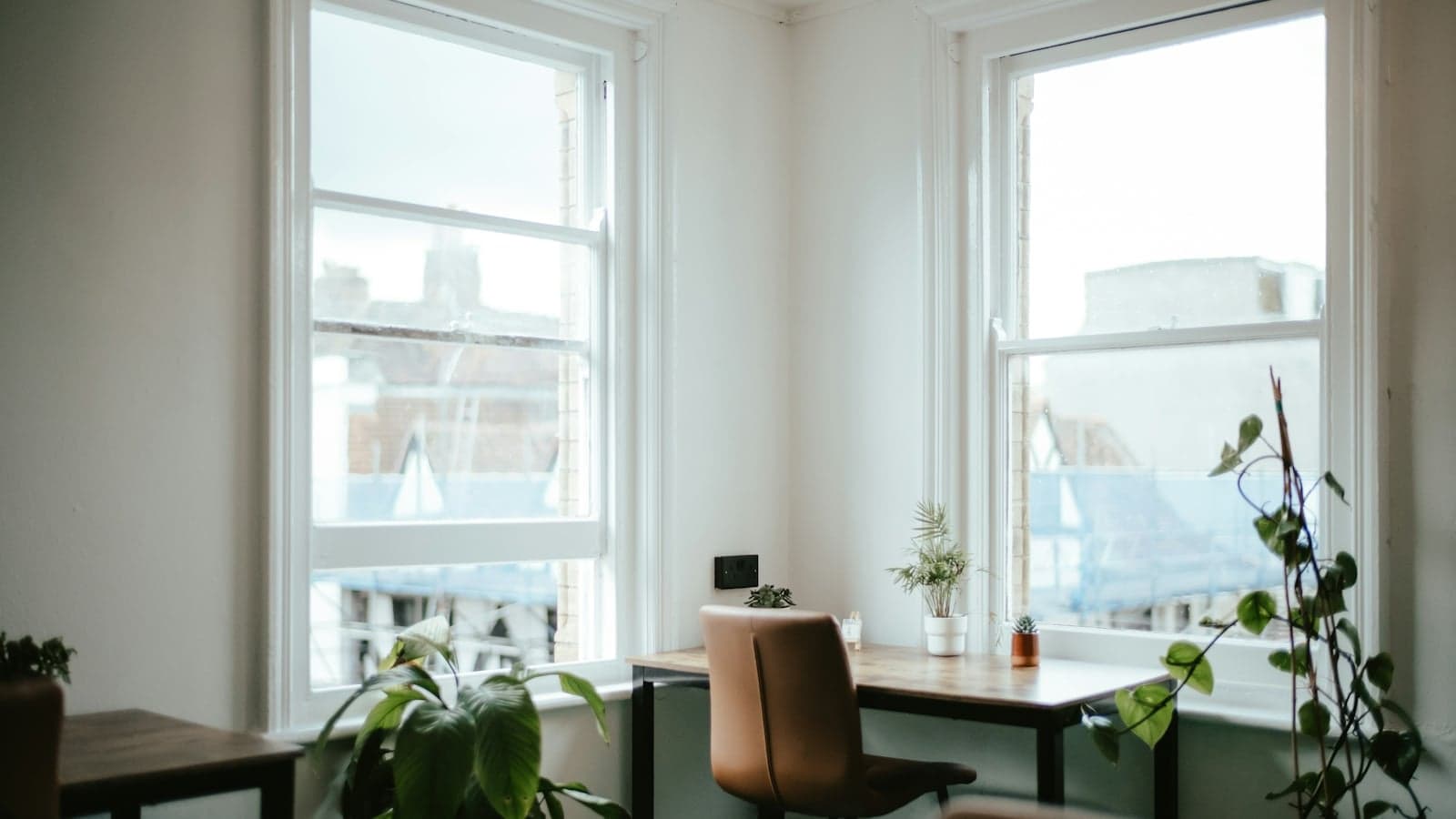
Short answer first: a good study environment is less about the perfect desk and more about removing decisions. Choose a comfortable, accessible place, gather the material for one task and reduce avoidable distractions. The useful test is whether the setup supports the work you need to do.
Why does the room matter at all?
The room can make some actions easier and others harder. Every time you have to decide whether to check your phone, whether to move somewhere else, whether to tidy up first, you spend a little of the energy that was meant for the material.
The habit does the work
A fixed study spot makes those decisions in advance. You sit in the same place with the same things, and you have fewer setup choices to make. There is no fixed number of days by which that must become a habit.
There is a memory effect too, though a modest one. A 2001 meta-analysis of studies on environmental context found that environmental context can affect recall, with effects depending on other cues and how learning and testing are organised. You will not sit the exam at your desk, so do not lean on that. The real gain from a fixed place is that you stop negotiating with yourself about starting.
A familiar place is an option for simplifying your routine, not a requirement for successful study.
Where should you actually sit?
There are three realistic options, and each has a price.
The library or a study room may offer quiet space and fewer household interruptions. Check opening hours, booking rules, access and whether the area allows discussion. Include travel and breaks in the plan.
A desk at home costs no travel and works well if you can keep the surface free of everything except study. The price is that everything else you normally do in that room keeps tugging at you.
A café works for some people, because a bit of background noise and other humans make it hard to fully drift off. Check noise, cost, seating and whether the task needs privacy or spoken practice.
If you are unsure, try one comparable task in each feasible place. Record what you completed and what interrupted you; choose from that experience rather than from a picture of an ideal desk.
What do light, noise and your chair actually do?
Light
Arrange light so you can read comfortably without glare on the page or screen. Change the lamp or screen position if reflections make the task difficult.
The chair
You do not need an expensive office chair, but you should be able to sit with your feet on the floor and the screen near eye level. Adjust the arrangement to your comfort and access needs, and leave room to change position or take breaks.
Temperature
Almost nobody thinks about this one. A review of office studies at Lawrence Berkeley National Laboratory found that performance on tasks like text processing and simple calculation peaked at around 22 degrees Celsius and fell as rooms warmed past 23 to 24 degrees. Those were office tasks, not a universal study-temperature trial. Use available ventilation where safe and appropriate, and adjust for comfort.
Should you listen to music while you study?
It depends on the task and the conditions.
If you are trying to understand or remember text, it is worth trying a quieter setting rather than assuming familiar music has no effect. Perham and Currie tested this in 2014: students' reading comprehension dropped when lyrical music was playing, with no statistically significant difference between the liked and disliked lyrical conditions in that study. The finding should not be extended into a claim that all instrumental music or background noise is harmless.
If you are doing something mechanical, typing up notes, sorting references, making figures, compare whether music helps you stay with the task or causes errors.
If you are mainly using music to drown out the room, try earplugs or quiet instrumental instead. Use ear protection only where you can still hear what you need for safety or communication.
What do you do about the phone?
If your phone is not required for the task or an access need, try putting it out of reach and silencing nonessential notifications.
That sounds excessive until you look at what the phone costs while it is just sitting there. Experiments at the University of Texas at Austin had students take working memory tests with their own phone on the desk, in a pocket or bag, or in another room. The other-room group did best, and it did not matter whether the phone was on or off. These experimental results do not establish the same effect for everyone. Unrelated messages can interrupt your work, and it is the same fight for attention that makes it hard to follow a long lecture.
If that does not stick, give the phone a fixed slot in your breaks instead. If you are running Pomodoro rounds, you already have five minutes every half hour where it is allowed.
What if you only have one room?
Most students do not have a study. If you live in a single room where you sleep, eat and work, you can still create a separation, it just has to be smaller.
Pick one side of the table, or one chair, that is only used for studying. Clear it completely when you finish for the day. If you have to use a shared or multipurpose space, a small tray or folder can make the task easy to set up and clear away.
Try a short setup routine. Clear the desk, fetch water, set the timer. Three actions that tell your brain the room has changed function.
Set it up in ten minutes
You do not need to build the perfect setup before you start. Do this next time you sit down:
- Clear the desk of anything not related to the task in front of you.
- Put the phone in your bag.
- Get proper light on the whole surface, and open a window for a minute.
- Keep water and whatever you need within reach, so you do not have to stand up.
- Write the one task this round is about on a piece of paper in front of you.
If you still struggle, investigate both the task and the conditions. Noise, discomfort, missing knowledge and competing demands can need different solutions. Our procrastination guide helps you identify a concrete next step.
The mistakes that undo a good setup
- Buying before trying. A new desk lamp and a standing desk do not fix a phone on the table. Change the cheap things first.
- Treating one location as compulsory. Have a practical alternative if your usual room is busy, inaccessible or too noisy.
- Mixing incompatible tasks. Agree whether a session with a friend is quiet individual work or discussion, and choose the right area.
- Using the setup as the task. Rearranging the desk for forty minutes is procrastination with a tidy result. Ten minutes, then start.
Remove the work the room cannot remove
A good study environment removes noise and friction. It does not remove the work of turning messy lecture notes into something you can actually revise from.
Where recording and uploads are permitted, Notibo can draft structured notes and questions from your material. Check the output before practising with it. Recording-generated flashcards and spaced repetition are Pro features included in the trial; individual generated cards cannot currently be edited. A useful study session still needs a specific task and time to review errors.