Short answer first: the eight New Zealand universities teach in the same few formats, and each wants a different note. The University of Otago describes a lecture as a 50-minute session carrying the core content of a paper, a tutorial as a small group led by a tutor for discussion, and a lab as practical work whose attendance may count towards your grade. Waikato and Lincoln add workshops, field trips and studios. On a clinical placement or a teaching practicum the rule turns around: Otago's medical school bans names and NHI numbers in case histories, and Victoria University of Wellington requires written permission before a student teacher films a child.
For the lecture, and only with the lecturer's permission, Notibo records from your laptop and gives you a transcript plus notes, and Pro is free for 14 days with no card.
This article covers what to write in each kind of class, what the universities say each class is for, and how to keep a week of notes for one paper in a shape you can revise from. Whether you may press record has its own article, linked where it matters.
What are the teaching formats at a New Zealand university?
Every university publishes a first-year page or a glossary that names its formats, and the words differ. Otago and Waikato call the unit of study a paper. Auckland, AUT, Victoria, Canterbury, Lincoln and Massey say course on the pages read here. If you have just arrived from NCEA, the shape of the week is covered in what changes from NCEA to university. This article is about the notes.
- Otago's lecture is a 50-minute oral session with the core content of the paper. The University of Otago's first-year page calls lectures the main method of instruction, tutorials small group sessions led by a tutor for discussion, and labs experimental or practical work that may be compulsory, with attendance that may count towards your grade.
- Waikato defines a paper as a named set of lectures, tutorials, labs or field trips. The University of Waikato's glossary puts one point at about 10 hours of work and says workshops, labs and field trips are an essential part of many papers, with attendance compulsory and part of the assessment.
- Victoria's small groups are a 50-minute tutorial or a three-hour lab or studio. Te Herenga Waka, Victoria University of Wellington, says on its timetable page that most courses have two or three 50-minute lectures a week and that tutorials usually start two to three weeks into the trimester.
- Lincoln defines its timetable activity types one by one. Lincoln University's timetable support page describes a lectorial as a mix of lecture and seminar, a workshop as more task-oriented than a tutorial, a studio as a dedicated workspace for design students, and standard field trip days as full-day slots, up to four a semester.
- AUT budgets 30 to 50 hours of class time per course. AUT's page on what to expect counts lectures, tutorials, workshops and labs at 30 to 50 hours a semester, with 100 to 120 hours of study and assignments on top.
The table is the article in one view. The last column is short on purpose: whether recording is allowed differs by university and by room, and recording lectures in New Zealand covers the rules and the law.
| Format | How a university defines it | What to write | Recording |
|---|---|---|---|
| Lecture | Otago: 50-minute oral session, the main method of instruction | Slide headings as a skeleton, what the lecturer adds, your questions | Ask the lecturer first |
| Tutorial | Otago: small group led by a tutor for discussion; Waikato: active participation expected | Your attempt, the model answer, why they differ | Everyone in the room is on it |
| Workshop | Lincoln: task-oriented, more participation than a tutorial | The task, the steps that worked, the feedback | As for a tutorial |
| Lab | Otago: experimental or practical work; Waikato: compulsory in many papers | Date, method as done, raw data with units, observations, the setup | The notebook, not a microphone |
| Studio | Lincoln: workspace for design students; Victoria: three-hour sessions in Architecture and Design | Design decisions, crit feedback, dated sketches | Ask |
| Field trip | Waikato: compulsory, part of the assessment; Lincoln: up to four full days a semester | Site, date, conditions, measurements, sketches | Not the point of the day |
| Placement or practicum | Massey: at least 1,000 clinical hours over three years; Auckland: at least 120 days of practicum in a three-year programme | De-identified reflections, skills practised, supervisor feedback | Never patients, clients or pupils |
Workshops, studios and field trips
Lincoln's definitions are the clearest public ones for the formats beyond lecture, tutorial and lab, and its page for new students adds that labs and field trips do not happen in the first week even though they show on the timetable. In a workshop, write the task, the steps that worked and the feedback in the words it was given. In a studio, date every sketch and write the crit feedback next to the decision it changed, because the portfolio has to show the decisions. On a field trip the notebook is a lab notebook that got wet: site, date, weather, position, measurements, sketches and photographs of the site rather than of people. Under Waikato's glossary, attendance on the trip is compulsory in many papers and forms part of the assessment.
How do you take notes in a lecture?
A lecture at Otago, Victoria and Waikato normally runs 50 minutes. The University of Canterbury's Academic Skills Centre calls the 50-minute lecture the main method of teaching at university in an undated leaflet on lecture notes. The University of Auckland adds the point that decides how you take notes: some content is only available in class and cannot be presented in the lecture recordings.
- Much of a specialised lecture is lost on you without the reading. The Canterbury Academic Skills Centre leaflet says preparation lets you tell material already in your texts from new material, tells you to use headings and list points briefly, and warns that after 25 minutes most people's thoughts are wandering.
- Auckland wants your notes reviewed within 24 hours. The University of Auckland's Learning Essentials page says to review your notes regularly, within 24 hours if possible, and to file them so you can find them later.
- Massey tells you to write the date, title and lecturer's name before it starts. The Massey University note-taking guide says to watch for cues such as the lecturer slowing down or repeating something, to write in your own words, and to read over your notes as soon as possible.
The slides are not the notes. Canvas, Moodle or Stream will have them afterwards, so your own notes are worth everything the slides leave out: the emphasis, the example built on the board, the question a student asked and the answer. Otago puts it bluntly: podcasts and notes are not a substitute for hearing it first hand.
A lecture routine that survives the week
- Before the lecture, do the set reading and write the date, the topic and the lecturer's name at the top of a fresh page, as Massey suggests.
- During it, use the slide headings as your skeleton and write only what the lecturer adds: the reasoning, the example, the caveat, the exam hint. Mark anything you did not follow with a question mark.
- The same day, fill the question marks from the reading or the recording, and file the page under the paper and the week.
The Canterbury leaflet speaks of tape recorders and overheads, and still has the practical rule: it is a courtesy to ask the lecturer's permission before recording, and a recording is not a substitute for making notes at the time.
What do you write in a tutorial?
A tutorial is where you find out what you did not understand in the lecture. Otago describes it as a small group led by a tutor for discussion and individual assistance. Waikato's glossary calls tutorials small-group, discussion-based classes where active participation is expected, and says most start in the second week. Canterbury's guide for international students says that if you attend, you are expected to contribute.
- Otago says some tutorials are compulsory and some are optional. Its first-year page leaves the split to each paper, which is why the paper outline is the first thing to read.
- Canterbury's tutors and demonstrators are often postgraduate students. The Academic Skills Centre guide on succeeding at university says lecturers are usually academic staff who do research, while tutors, teaching assistants and lab demonstrators are often postgraduates.
- Auckland's tutors review the lecture material and the readings. Learning Essentials says to attend regularly, do the assigned reading first, and take part in the discussion.
The useful note from a tutorial is not what the tutor said. It is the gap between your prepared answer and the model answer. Write your attempt before you go, then write the model answer next to it and the reason the two differ. Add the wrong answers other students gave, because those are the distractors the exam will use. Leave with questions for office hours.
Do tutorial attendance and participation count towards your grade?
This is decided paper by paper, and the four universities whose pages address it say different things. The rest leave it to the paper outline or course outline, which is where to look before you skip a tutorial in week three.
- Waikato counts tutorial participation in some papers. The glossary says attendance and participation in tutorials is part of the assessment process in some papers and will contribute to your final grade.
- Otago gives no marks for turning up, but a terms requirement can stop you sitting the exam. The University of Otago's Guidelines for the Assessment of Student Performance say it is not appropriate to give grading credit for attendance at class sessions, and that terms requirements setting minimum attendance before a final examination can be sat can be enforced where there is a clear rationale, announced in the LMS and in the first class.
- Victoria limits participation marks to 10 per cent and bans marks for attendance. Te Herenga Waka's Assessment Handbook, August 2026 version, says marks must not be allocated or deducted for simple attendance, that up to 10 per cent of a course may be based on participation assessed on clearly defined tasks, with more only where its Learning and Teaching Committee approves it, and that a mandatory course requirement can set a level of attendance. Miss one with 50 per cent or more and the grade is a failing K.
- Canterbury's guide says participation is not usually graded. The same Academic Skills Centre guide says attendance is usually not monitored, though in some courses it may be compulsory.
Whatever the marks, the tutorial is where the exam questions get rehearsed, which is the better reason to go.
What must a lab notebook contain?
A lab is the one format where the notes are part of the assessment rather than a route to it. Otago's CHEM191 runs 36 lectures and five three-hour labs in the first semester, and lab attendance is compulsory. The University of Auckland's Chemical and Materials Engineering department says you cannot complete a course without completing the laboratories, and that you follow the laboratory manual and the supervisor at all times.
- Otago's CHEM191 has five three-hour labs and attendance is compulsory. The CHEM191 paper page lists the 18-point paper as 36 lectures plus five 3-hour laboratories, with compulsory lab attendance and a progress test.
- Massey's report structure tells you what the notebook has to feed. The Massey University science or lab report page wants the materials, apparatus and procedure in the method, what you found and nothing else in the results, and whether the results support the hypothesis in the discussion.
- An Auckland engineering student describes the lab journal as dates, times, instructors and teammates. A Part II student on the Faculty of Engineering and Design student blog, August 2026, says it also holds the teaching assistants' notes, that it was not a requirement in that course's first semester, and that the second semester has a dedicated lab journal. That is one student's course, not a faculty rule.
The report is written later from what the notebook holds, and the notebook cannot be rebuilt from memory. Everything Massey's method section needs has to be on the page before you leave the lab.
What goes on the page during the lab
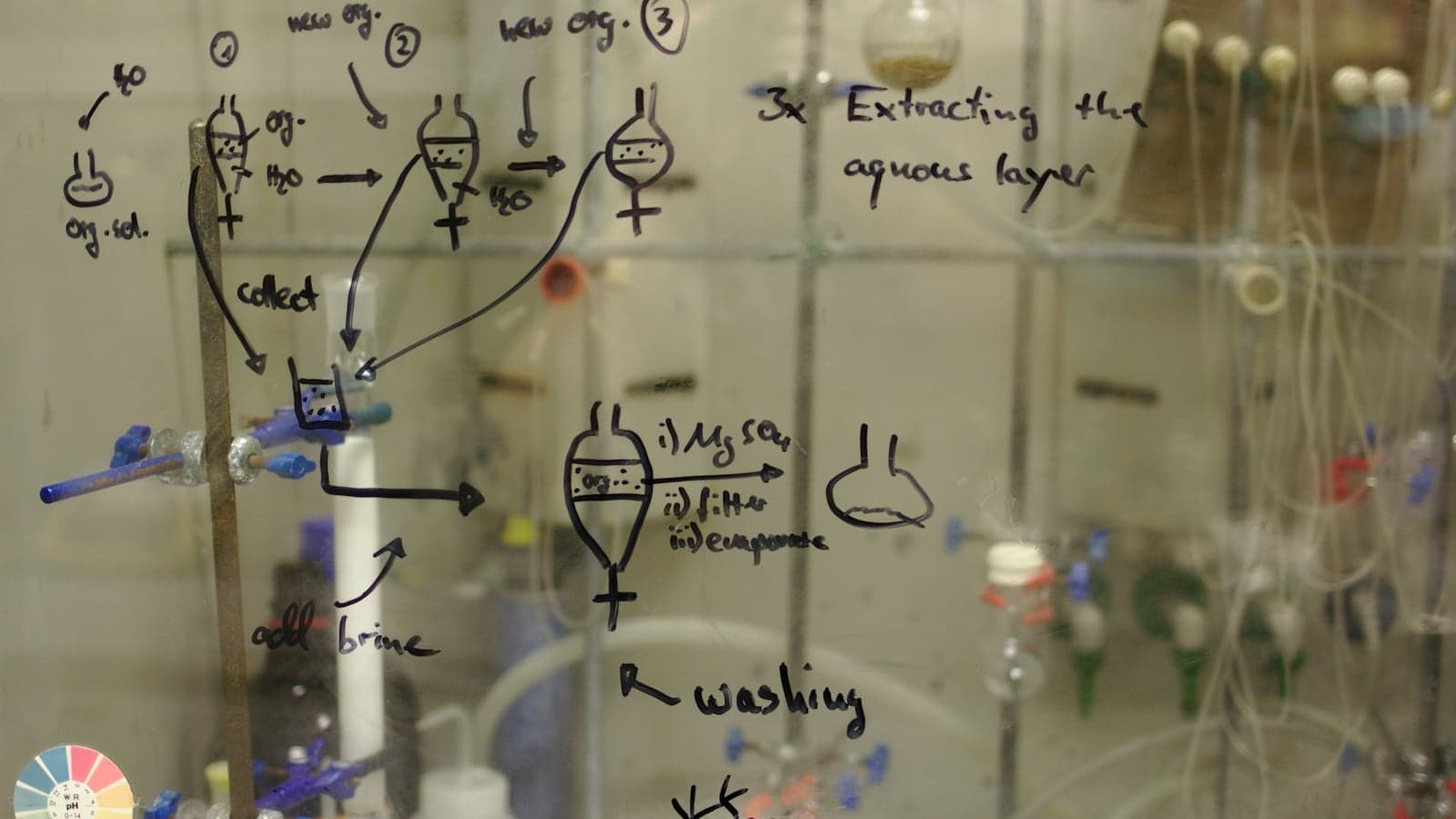
Write the date, the experiment title, your partner's name and the demonstrator's name at the top. Record the method as you actually did it, including every change from the manual, because a deviation you forget becomes an unexplained result. Take each raw reading with its unit at the moment you read it. Sketch the setup. Note what you observed, separately from what you calculated. Leave the interpretation for the report.
A microphone has no job here. The content of a lab is in your hands and on the instruments, and the demonstrator's spoken instructions are safety instructions you follow at the time. Use week one, before the labs start, to read the lab manual.
What are the rules on a clinical placement or practicum?
Massey's Bachelor of Nursing sends you on clinical placements totalling at least 1,000 hours across three years. Otago's Bachelor of Social Work has 120 days of supervised fieldwork, 50 in the first placement and 70 in the second, at a minimum of 7.5 hours a day. The University of Auckland's three-year teaching programmes give at least 120 days of practicum, and its one-year programmes at least 80. In all of them the record belongs to the patient, client or pupil.
- Otago's medical students may not record names, NHI numbers or dates of birth in case histories. The University of Otago's Guidelines on Maintaining Confidentiality of Clinical Material, revised March 2015, say Ms A, age x years is sufficient, that you should never copy or take images of case records, that documents with patient information must be de-identified, kept securely and destroyed when no longer required, and that recording patients on photo, video or audio should not be undertaken unless explicitly directed by teaching staff.
- The Nursing Council's Code of Conduct standard 5.8 bans discussing health consumers in public places, including social media, even without names. The Council's Guidelines on Social Media and Electronic Communication, written for nurses, quote standard 5.2, that information from the nurse and health consumer relationship is for professional purposes only, and warn that referring to a patient by a nickname, room number or diagnosis is still a breach.
- Massey's nursing students sign a Professional Conduct and Confidentiality document at orientation. The Bachelor of Nursing page lists it as a condition of clinical placement, with placements in aged residential care, emergency medicine, mental health, primary care and surgical settings.
- Victoria's student teachers need written permission before observing, videoing or photographing children. Te Herenga Waka's professional practice requirements say student teachers must not name teachers, schools, children or their families in any forum, including written assignment work, must not post photos or comments about them on social media, and must not share images of children outside the centre or school.
- The Teaching Council's Code binds teachers with a practising certificate and holders of a Limited Authority to Teach. The Council's page on the Code of Professional Responsibility says it applies to registered and certificated teachers and LAT holders under section 485 of the Education and Training Act 2020, and section 485 on legislation.govt.nz says the code of conduct is binding on all teachers who hold a practising certificate and on all authorised persons. The rules that reach a student teacher on practicum are the university's own, like Victoria's above.
The Otago fieldwork page says students work the same hours as the organisation's staff, and Auckland's practicum FAQ describes a practicum as time in a centre or school alongside a registered teacher, starting one-on-one and building to whole classes.
What a placement notebook can hold
Skills you practised and what your supervisor or associate teacher said about them, in their words. Your own reflection, where the programme asks for it, as Massey's nursing practice courses do. Questions for your next supervision. Any case in Otago's form: Ms A, age x, presentation, what was done, what you learned. If your programme requires a key to who you saw and when, Otago's guideline says to keep it separately and securely, and to password-protect any file with patient information.
Nothing with a patient's, client's or pupil's voice or face goes on your phone. Otago allows recording patients only when teaching staff direct it; Victoria wants written permission before any video or photo of a child, taken on the school's own camera or device unless the associate teacher expressly allows yours. A recording app does not belong on placement.
How do you bring a week of notes for one paper together?
By Friday one 15-point paper has produced two or three lecture pages, a tutorial sheet and perhaps a lab. Waikato's arithmetic gives that paper about 150 hours over the trimester; Massey tells new students on its starting university page that each course takes about 12 hours of work a week, and Lincoln says 10 to 12. Most of those hours are outside any room, so the notes have to work without the lecturer.
- The same day as each lecture, fix the page: fill the question marks, add the reading's example, file it under the paper and the week.
- After the tutorial, put the model answer beside your attempt and write one line on why they differed.
- On Friday, write one page for the paper: the five to ten claims of the week in your own words, one worked example you could redo, and the one question you still cannot answer. The method is in effective note-taking.
- Turn that page into questions you can test yourself on, so the week is revised rather than reread; making flashcards from notes shows the shape.
- If there was a lab, draft the report's method and results from the notebook while the bench is fresh.
The Friday page is what you revise from in the study break, and the questions are what you test from. Neither exists if the lecture note was left as a copy of the slides.
Where Notibo fits
Notibo is for the lecture column of the table above, and only where the lecturer has said yes. It records a lecture on a computer, or takes an audio file you upload, and returns a transcript, structured notes and flashcards with spaced repetition, which covers steps three and four of the Friday routine for the lectures. It also turns PDF, PPTX or DOCX slides from Canvas, Moodle or Stream into notes and flashcards. Details are on the lecture recording page.
It is not for the lab, where the notebook is the assessment, and not for placement, where nothing with a patient's or pupil's voice should be recorded at all. The transcript is in the language spoken, from 89 languages, and audio is deleted from storage once the transcript and notes are generated. Files are stored in the EU on Supabase in Frankfurt; transcription and the AI notes run on US processors under standard contractual clauses. You get Pro free for 14 days, with 240 minutes of recording, and no card is asked for. After those 14 days the free plan gives 30 minutes of recording a month. Pro is 9.99 euro a month or 88.99 euro a year, shown in New Zealand dollars at checkout.