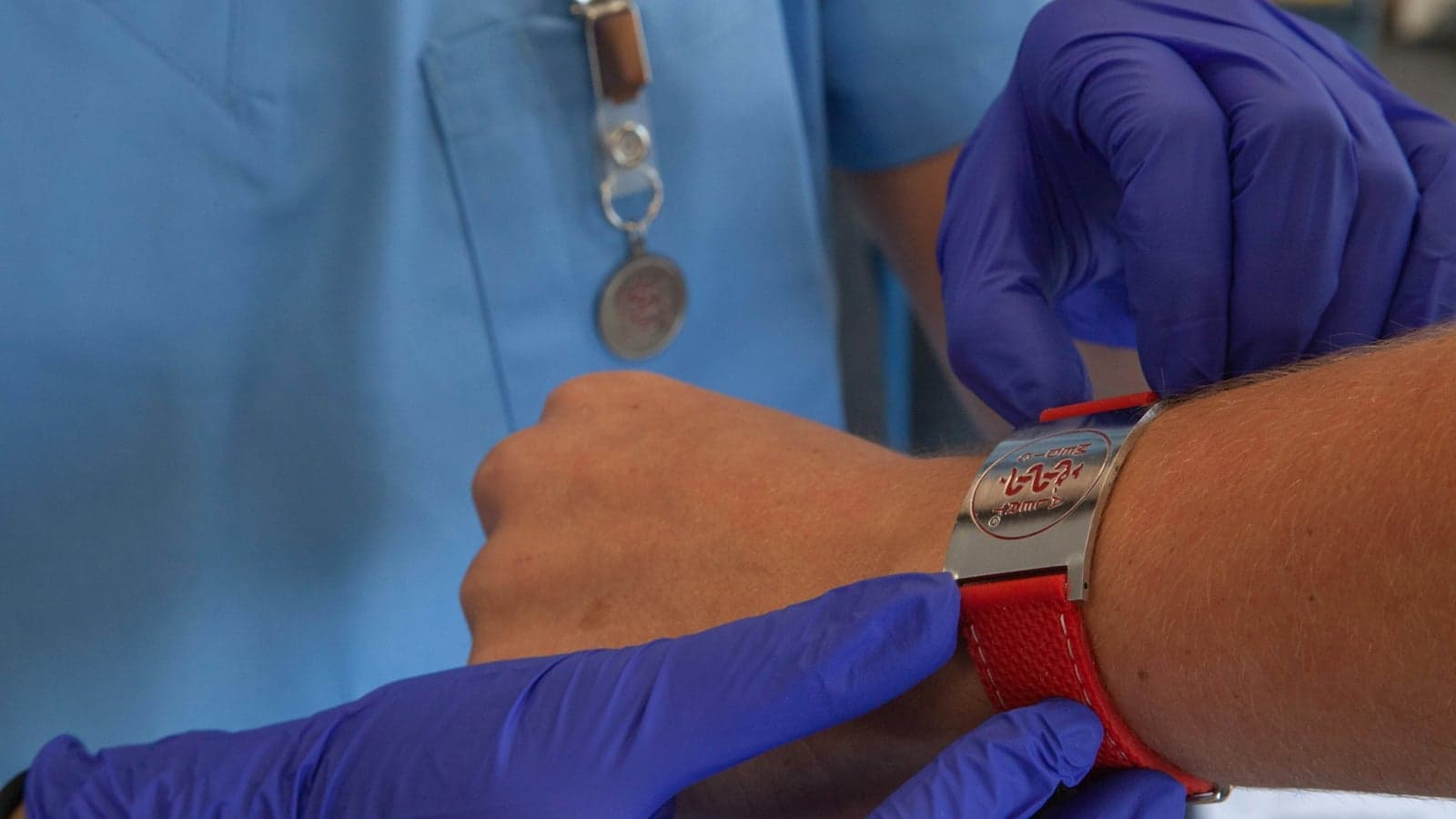
Short answer first: a Bachelor of Nursing in Australia usually runs three years full time, and the part that shapes your week is placement. ANMAC's accreditation standards require at least 800 hours of professional experience placement, separate from simulation, starting in first year and finishing in Australia near the end of the degree. Placements are rostered shift work, assessed satisfactory or unsatisfactory rather than marked out of 100. Your university registers you as a student with Ahpra, and after you graduate you apply for registration as a registered nurse yourself.
The rules below come from ANMAC, Ahpra and four universities that publish theirs. Placement hours and shift patterns differ by program, so read your own placement guide and subject outlines before you plan a semester around anything here.
What is a nursing degree in Australia made of?
Classroom subjects, a simulation lab and rostered placement, running side by side rather than one after the other. The degree exists to get you registered, so its shape is set by accreditation rather than by the university alone.
- ANMAC accredits, the Board approves. UWA's Bachelor of Nursing (Honours) page says the degree is accredited by the Australian Nursing and Midwifery Accreditation Council and approved by the Nursing and Midwifery Board of Australia, and that graduates are eligible to apply for registration to practise as a registered nurse in Australia.
- Three years is the common length. Deakin's Bachelor of Nursing runs three years full time at Burwood, Waterfront and Warrnambool, with entry through VTAC and lowest selection ranks from the 2026 early and first round VTAC offers of 70.05 at Burwood, 60.65 at Waterfront in Geelong and 51.35 at Warrnambool.
- Four years is the other model. UWA runs a four year integrated honours degree with a final year internship, a minimum ATAR of 70 or equivalent, and over 400 hours of simulation learning alongside the placements.
- Simulation is preparation, not placement. ANMAC's standards require the program to include content and sequencing that incorporates simulated learning experience to prepare students for placement, and count placement hours separately.
The practical difference for a first year student is that you are on a health service's roster well before you have finished the theory. Deakin says placements start in the first trimester and continue each trimester, in metropolitan, regional and rural settings, across acute and sub-acute care, aged care, rehabilitation, paediatrics, community health and mental health.
How many placement hours do you need to register?
At least 800, and the requirement is written into the accreditation standards rather than left to each university. Criterion 3.12 of the Registered Nurse Accreditation Standards 2019 requires a program to include a minimum of 800 hours of quality professional experience placement completed by all students, in a variety of settings relevant to the curriculum, exclusive of simulation and not exceeding one-sixth of the placement hours undertaken outside Australia.
Two more parts of the same criterion set the timing. Placement has to start as soon as practicably possible in the first year of study, so that students engage early with the professional context of nursing. Placement also has to appear towards the end of the program, conducted in Australia, to demonstrate that you have reached the NMBA standards for practice. ANMAC's accreditation standards page confirms the 2019 standards are the current ones for registered nurse programs.
| Program | Length | Placement hours | When placement starts |
|---|---|---|---|
| Deakin, Bachelor of Nursing | 3 years full time | 800 hours of professional experience placements | First trimester, then every trimester |
| UTS, Bachelor of Nursing, standard entry | 3 years | 800 hours minimum for registration; published subjects total 840 | Introduction to clinical placement, 3 weeks |
| UTS, Bachelor of Nursing, accelerated entry | Accelerated program, five placement subjects | 600 hours minimum for registration; published subjects total 640 | Clinical Practice 2A, 2 weeks |
| UWA, Bachelor of Nursing (Honours) | 4 years full time | Over 800 hours of supervised placements | Second semester of first year |
Read the hours as a floor, not a target. UTS's clinical placement guide lists seven standard entry placement subjects that add to 840 hours, and says hours only count towards the Ahpra total where you pass the clinical subject. Fail the subject and the hours you did go with it.
What do the placements look like year by year?
They get longer and the expectations rise. UTS publishes the whole sequence, which is the clearest picture available of how the hours land.
| Subject | Duration | Hours |
|---|---|---|
| Introduction to clinical placement | 3 weeks | 120 |
| Clinical Practice 2A | 2 weeks | 80 |
| Nursing care of the older person | 2 weeks | 80 |
| Fundamentals of Mental Health Nursing | 2 weeks | 80 |
| Clinical Practice 2B | 2 weeks | 80 |
| Clinical Practice 3A | 4 weeks | 160 |
| Transition to professional practice | 6 weeks | 240 |
UTS runs these in the non-teaching weeks at the end of each session and in the summer session, which is why nursing students talk about a semester break that is not one. UWA arranges the same idea differently: placements begin in the second semester of first year, students are allocated a health service partner and do all or most placements within it, a rural or remote placement in Western Australia falls in the second or third year, and the fourth year ends in an internship.
The shift roster
UTS is specific about what the roster does to your week. Placements typically require 40 hours a week excluding breaks, with rosters issued two weeks in advance. Morning shifts can start as early as 6.30am and afternoon shifts finish by 11.00pm, and students may be put on a seven day rotating roster including weekends and nights. There has to be a minimum 8 hour break between placement shifts, and no more than 12 hours of placement in a day.
Paid work is the pressure point. UTS asks students to prioritise placement and not to work alongside it, requires a minimum 10 hour break between paid employment and a placement shift, and says a student who is drowsy and unable to concentrate will be asked to leave. Plan the shifts you will drop before the block starts, not during it.
How is a nursing student assessed?
Twice over, by two different systems. Your classroom subjects are marked the way any subject at your university is marked, and the grade scales and special consideration rules are covered in how Australian university exams work. Placement is judged satisfactory or unsatisfactory.
- The ANSAT carries the placement. UTS assesses placement with the ANSAT, running a formative assessment usually at the midpoint and a summative assessment on the last shift, each rated satisfactory or unsatisfactory.
- A form follows you back. The Clinical Assessment Form records clinical performance, clinical skills completion and attendance, and includes two written reflections reviewed by your clinical facilitator. The facilitator submits it within five business days and the subject coordinator signs it off.
- Skills are checked separately. On top of the ANSAT, students complete a set of core clinical skills assessments during the formative part of the placement, marked by the clinical facilitator and uploaded at the end.
- Not Yet Competent has a process. A skill assessed as not yet competent triggers a Learning Support Plan, and practice judged unsafe can mean exclusion from the placement.
- Unsatisfactory ends in a fail. An unsatisfactory summative result that is upheld after a meeting with the clinical academic lead and the subject coordinator results in a fail for the subject.
What a Learning Support Plan means
It is a written plan, not a warning letter. The facilitator writes down the goals and strategies for the rest of the placement, you reflect on the feedback and record your own strategies, and both of you work towards the goals with regular feedback from ward staff. Meet them and the plan is marked satisfactory. It can be started at any point, and UTS says it should be started as soon as early signs appear, which is a good reason to ask for the formative feedback rather than wait for it.
What can you write down, photograph or record on placement?
Your own learning notes, with nothing that identifies a patient in them. Everything else on that list is restricted, and UTS spells it out.
Phones and confidentiality come first. Mobile phones stay in your bag and come out in designated meal breaks only, recording conversations or taking photos with them is strictly prohibited, and social media is off limits while you are on placement. Taking identifiable patient information home, handover sheets included, and taking or sharing photos or videos of patients, staff or placement sites are on its list of confidentiality breaches, and those requirements continue after the placement ends. Recording rules for classes on campus are a separate question, covered in whether you can record a lecture, and none of that applies in a clinical setting.
Documentation in the record is the second, and here you are expected to write. UTS says students actively participate in documenting patient care, within their scope of practice, and that every entry by a student must be co-signed by the supervising clinician, written clearly and legibly in dark ink, timed on a 24-hour clock, dated, signed with a printed name and designation, and written objectively without demeaning remarks. The full list of breaches, and what to write for yourself on placement and in each type of class, is in notes for tutorials, pracs and placements.
How do you get registered with Ahpra?
In two steps, and the first one is not your job. Ahpra's student registrations page says all students enrolled in an approved program of study, or undertaking clinical training in a health profession, must be registered as a student, and that students do not apply because the education provider is responsible. There is no fee and no registration number, and the student register is kept private, so anyone who needs proof of your registration asks your university.
The second step is yours. Ahpra's graduate applications page recommends getting the application in early, up to 90 days before you expect to complete all course requirements including placements, because Ahpra starts assessing the application before your results arrive. Once your university submits the graduate results, Ahpra aims to finalise the application within two weeks where everything else has been provided. Missing documents and criminal history checks from overseas are what stretch it out.
One thing to know while you are still a student: your university has obligations to Ahpra about you. UTS describes a process for mandatory notification where a student's impairment may place the public at substantial risk of harm, decided by a university panel on the evidence.
Can you go from enrolled nurse to registered nurse?
Yes, and at some universities the pathway is published rather than negotiated. The University of Wollongong says students who have completed the Diploma of Nursing HLT54115 or HLT54121 are eligible to apply for entry into the second year of its Bachelor of Nursing, worth 48 credit points, and that anyone awarded a second year place must hold current registration as an enrolled nurse with Ahpra.
Two details matter more than the headline. Entry into second year is not guaranteed, because places are limited, so the pathway is an application rather than an automatic upgrade. And if you hold a different nursing qualification, UOW asks you to apply for the degree and then seek credit, with transcripts and subject descriptions, which the faculty assesses only after a complete application arrives. UOW also notes that years 2 and 3 of its Bachelor of Nursing run on an extended academic year.
If you are already working as an enrolled nurse, ask the university about the academic year before you count on a long summer. An extended year and a rostered job are hard to hold together without a plan for the weeks where both are running.
How do you study around a placement block?
By treating the placement weeks as revision rather than a gap in it. Three habits do most of the work.
Write five lines after each shift while the ward is still fresh: what the patient presented with, what you did, which skill you were assessed on, and the one thing you did not understand. Turn that last line into questions and answer them from memory later in the week, which is the technique described in active recall. It suits nursing because the same skills come back on the next rotation.
A week with a placement block in it
- Before the block, read the subject outline and the placement guide, and print the clinical skills forms your facilitator will need.
- Set the two study slots you will actually keep, most likely the two days off in a seven day rotating roster.
- After each shift, write the five lines. Do not try to write a full reflection at 11pm.
- On the first day off, turn the week's five-line notes into questions, and answer last week's.
- Book the formative feedback conversation yourself if the midpoint passes without it.
- Keep one evening free. A minimum 8 hour break between shifts is a floor, not a plan.
Where Notibo fits
On campus, not on the ward. Placement rules ban recording and photographs, and no app changes that. Where Notibo helps a nursing student is the other half of the degree: lectures and tutorials where your university has given permission to record, and the pile of PDF, PPTX and DOCX files that skills subjects run on. It records on a computer, or takes an audio file you upload, and returns a transcript, structured notes and flashcards with spaced repetition. Uploads are capped at 50 MB, and one recording can run up to two hours. The first 14 days of Pro are free, with 240 minutes of recording and no card. When the trial ends, the free plan includes 30 minutes of recording a month. Pro is 9.99 euro a month or 88.99 euro a year, with the local amount shown at checkout.
For a placement block the flashcards are the part that travels. Build a deck from the skills guide before the block and review it in the gaps, rather than carrying paper that would have to go in a confidential documents bin. Files are stored in the EU on Supabase in Frankfurt, transcription and the AI notes run on US processors under standard contractual clauses, and audio is deleted from storage once the transcript and notes are generated. The privacy policy lists the processors. Never upload anything with a patient in it.