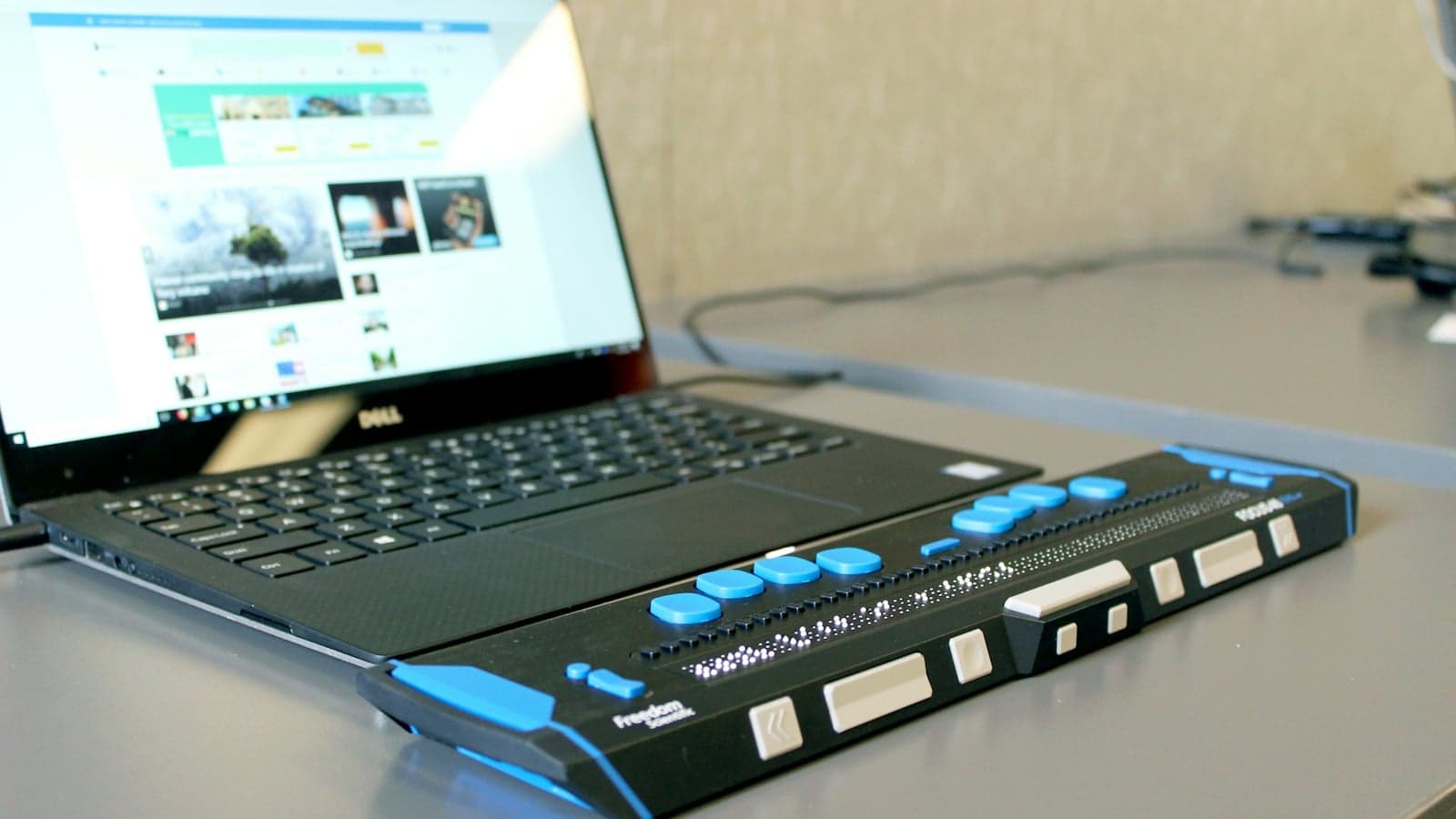
Short answer first: the money is real, but it does not come to you. The Higher Education Authority runs the Fund for Students with Disabilities on behalf of the Department of Further and Higher Education, and it pays your college, not your bank account. You register with the disability or access service, they assess your needs, and they apply for you. The fund covers assistive technology and the training to use it, academic or learning support, non-medical helpers such as notetakers, deaf supports and transport. DARE is a separate thing. It is a way in, not a support once you are in.
Three systems get mixed up constantly: the fund, the admissions route, and the accommodations your college puts in place. They have different owners, different paperwork and different clocks. This is what each one does and what it does not.
What is the Fund for Students with Disabilities?
It is the national pot of money that pays for disability supports in Irish higher education. The HEA describes it as funding to assist institutions in offering supports and services to eligible students with disabilities so that they can access, fully participate in and successfully complete their chosen course of study. If you are already pricing up software to buy yourself, read this before you spend anything; the paid options are covered in the note-taking apps Irish students actually use.
- The HEA manages it. The Higher Education Authority administers the fund on behalf of the Department of Further and Higher Education, Research, Innovation and Science.
- It is not means tested. AHEAD states that the fund is not means tested and is available to undergraduates and postgraduates. Household income decides your SUSI grant. It does not decide this.
- It is allocated to the college. The HEA says funding goes to institutions, which have full discretion on how it is allocated locally and remain responsible for managing it through the year.
- Eligibility has a residency test. The HEA sets out legal residency in Ireland for three of the five years before the course starts, plus nationality conditions matching the Free Fees criteria.
- A needs assessment is the evidence. AHEAD's description of the process puts a confidential needs assessment with a disability officer before the college applies for you, and the supports are built on that assessment.
That last point is why the whole thing runs through your college. Without a needs assessment on file, you are invisible to the fund, however obvious your situation feels to you.
Who applies for it, you or your college?
Your college. AHEAD sets out the sequence plainly, and every Irish institution runs some version of it.
- Register with the disability or access service in your college and give them medical documentation.
- Sit a confidential needs assessment with a disability officer.
- The service applies for the Fund for Students with Disabilities on your behalf.
- The college receives the funding and puts the supports in place with you.
There is no form you send to Dublin. There is no receipt you claim back. AHEAD is also clear about ownership: equipment provided under the fund remains the property of the third level institution. You get the use of a machine or a licence, not a purchase.
That has one practical consequence students learn too late. Buying a piece of software in September because you are sick of waiting means you have paid for something the fund might have covered, and you cannot hand the invoice in afterwards.
What does the fund actually pay for?
The HEA publishes the categories. They are broad, and the detail inside each one is decided locally by your college.
| Category | What it usually means |
|---|---|
| Assistive technology, equipment and software | Text to speech and speech to text tools, screen readers, reading and literacy software, mind mapping software, digital recorders, ergonomic equipment. The college buys and owns it. |
| Training on that technology | The HEA lists student training inside the same category. A tool nobody showed you how to use is not a support. |
| Non-medical helpers | The HEA names personal assistants and notetakers. |
| Academic or learning support | One to one or small group learning support arranged by the institution. |
| Deaf and hard of hearing supports | The HEA names sign language interpreters and SpeedText. |
| Transport support | Where the ordinary route to campus is not usable. |
The exclusions matter as much. The HEA's list of what the fund does not cover starts with assessment or diagnosis of a disability, and goes on to any medical equipment, assistance or support, course-related equipment, materials or software that every student on the course needs, staff training and development, and student accommodation, on campus or off it.
Read that first exclusion twice. The fund will not pay to get you diagnosed. If you need an assessment to produce evidence, that cost sits with you or with the health service, and it sits before the fund can do anything. That is the single most common reason a first year arrives in November with nothing in place.
What is DARE, and what does it not do?
DARE is the Disability Access Route to Education. Access College describes it as a third level alternative admissions scheme for school leavers under the age of 23 as of 1 January whose disabilities have had a negative impact on their second level education, offering reduced points places to applicants who faced additional educational challenges at second level.
It works through the CAO and it has its own deadlines, separate from the ordinary application.
- Apply to the CAO by 17:00 on 1 February. Access College sets the ordinary CAO closing time as the first step.
- Tick the DARE box and complete Section A by 1 March. Section A is questions 1 to 5 of the online Supplementary Information Form.
- Get Sections B and C to the CAO by 17:00 on 10 March. Section B is the Educational Impact Statement, completed by your school. Section C is the Evidence of Disability form, completed by a professional. Both are posted to the CAO in Galway.
- The outcome arrives in early July, before offers.
Two limits are worth being blunt about. DARE does not guarantee a place: you compete for a reserved number of places at lower points, and Access College's FAQs say you still have to meet the minimum entry and course requirements. And it does nothing for you after registration week. The same FAQs say that whether you go to college through DARE or not, you will be offered educational, technological and personal supports while studying. The scheme is the door, not the room.
If you are over 23 on 1 January in the year of entry, DARE is closed to you and the mature route is the one to read: mature students in Ireland covers how that application works. The disability service is open to you either way.
| DARE | Registering with the disability service | |
|---|---|---|
| What it does | Reduced points place at entry | Puts supports and accommodations in place |
| Who it is for | School leavers under 23 on 1 January in the year of entry | Any registered student with evidence of a disability |
| When | CAO cycle, February and March | As soon as you accept your place, then annually |
| Who you deal with | CAO and your school | Your college's disability or access service |
| What it pays for | Nothing | Supports funded through the Fund for Students with Disabilities |
What does registering with the disability service get you?
Concrete things, named in each institution's own documents. Two Irish examples make the range clear.
At UCC, Disability Support lists exam accommodations such as extra time, technology and a smaller or shared venue, along with assistive technology, lecture recordings, accessible transport, a personal assistant, occupational therapy and learning support. Accommodations are identified during your needs assessment, and the same process is used to plan for Work Integrated Learning placements in advance rather than in the week you start.
At Trinity, the accommodations are codified. The disAbility Service's exam accommodations include 10 minutes an hour extra time, a low distraction, individual or group venue, a reader, a scribe, use of a computer, electronic papers, ergonomic furniture, papers enlarged to A3, and food and drink in the exam hall. They are agreed during the needs assessment and written into a LENS report, which the service forwards to the Academic Liaison Officer for each student at the start of the year.
Extensions are the exception
Here is the part nobody tells first years. An accommodation for exams does not extend your assignment deadlines. DCU's Disability and Learning Support Service says it directly: for extensions on continuous assessment, students must contact their lecturer directly, and extensions are not automatic even if the student has signed up to the DLSS. The DLSS submits exam support requests to Registry, who coordinate them, but coursework is a conversation with the module lecturer.
Permission to record a lecture is a similar case. It usually comes through the disability service rather than through the lecturer, and it carries conditions on use and sharing. The rules at each Irish university are set out in recording lectures in Ireland.
What evidence do you need, and when should you start?
Evidence is the bottleneck, and it is the one part you cannot delegate.
Trinity publishes a table of who may sign off on what. ADHD and autism need a report from a psychiatrist, psychologist, neurologist or paediatrician, with no age limit on the report. Vision impairment needs an ophthalmologist or ophthalmic surgeon. Deaf and hard of hearing students can use an audiologist, ENT consultant or confirmation from a deaf school principal. A mental health condition needs a report from a psychiatrist or specialist registrar that is less than five years old. All of it must be in English. UCC applies the same language rule and will take either an existing letter from a GP or health professional or its own Evidence of Disability form.
The folder you bring to the needs assessment
Have these ready before you book the appointment, because Trinity tells applicants not to start the online application until the documents are in hand.
- The professional report or letter, in English, from the right type of professional for your condition.
- The date of the report, checked against any age limit your college applies.
- A list of what actually goes wrong for you in a lecture, a lab and an exam, in plain words.
- Your timetable, so the officer can see where the pressure lands.
- Any accommodation you had for the Leaving Certificate, and what it did or did not fix.
The third item is the one students skip and the one the assessment is built on. "I have dyslexia" is a diagnosis. "I lose the thread of a lecture if I try to write while listening, and I cannot finish a three hour paper by hand" is a needs assessment.
Does the fund exist in further education too?
In a different form, under a different body. The HEA states that management of the Fund for Students with Disabilities for the further education sector transferred to SOLAS with effect from the 2020/21 academic year.
The practical answer for a PLC student is that the shape of the process is the same, but the questions go elsewhere: your college's disability support office, your local Education and Training Board, or SOLAS. Do not ring the HEA about a PLC place, and do not assume a support you had on a PLC course transfers automatically when you progress into a degree. It does not. You register again with the new institution's service, and the needs assessment is done again.
How do you keep the supports working all year?
Registration is not a one-off. The supports have to be re-triggered against dates, and the dates are published.
Trinity sets application cut-offs for reasonable accommodations by assessment period: the last Friday in October for semester one assessments, the last Friday in February for semester two, and the last Friday in June for reassessments. DCU publishes a deadline before each exam period, with the semester two one falling in March. Miss the cut-off and the accommodation exists on paper but not in the exam hall.
Your first month, in order
- Accept your place, then email the disability or access service in the same week.
- Send your evidence of disability in English and book the needs assessment.
- At the assessment, describe the tasks that break, not just the diagnosis.
- Check the exam accommodation cut-off for your first assessment period and diary it.
- Ask when the assistive technology will arrive and who trains you on it.
- Ask your module lecturers, separately, what their extension policy is.
The gap between steps three and five is where a term gets lost. Equipment ordered in October can arrive in November, which is why the request goes in before teaching starts, not after the first assignment goes badly.
Once the supports are running, the study problem is the ordinary one every student has, and the module descriptors decide it. How Irish assessment is actually built, and where the marks land, is covered in how Irish university exams work.
Where Notibo fits
Notibo records a lecture, or takes an audio file you upload, and returns a transcript, structured notes and flashcards with spaced repetition. It also turns PDF, PPTX and DOCX files into notes and flashcards, which is the useful part if your reading list is heavy and reading is the slow bit. It transcribes 89 languages, and the transcript comes back in the language that was spoken. Pro is free for the first 14 days, with 240 minutes of recording and no card. After the trial there is a free plan with 30 minutes of recording a month, and Pro is 9.99 euro a month or 88.99 euro a year. Uploads are capped at 50 MB, and long recordings are saved in smaller parts as they run and joined back into one transcript. More on the recording side is on the lecture recording page.
Two honest things. It is not funded through the Fund for Students with Disabilities: that money buys technology your college chooses and owns, so the service is the place to ask before you pay for anything yourself. And on data, your files are stored in the EU, on Supabase in Frankfurt, while transcription and the AI notes run on US processors under standard contractual clauses. Recording anyone needs permission first, and if recording is your accommodation, the permission comes with the conditions your disability service attached to it.